Be yourself; Everyone else is already taken.
— Oscar Wilde.
This is the first post on my new blog. I’m just getting this new blog going, so stay tuned for more. Subscribe below to get notified when I post new updates.
Be yourself; Everyone else is already taken.
— Oscar Wilde.
This is the first post on my new blog. I’m just getting this new blog going, so stay tuned for more. Subscribe below to get notified when I post new updates.
KOBE BEEF
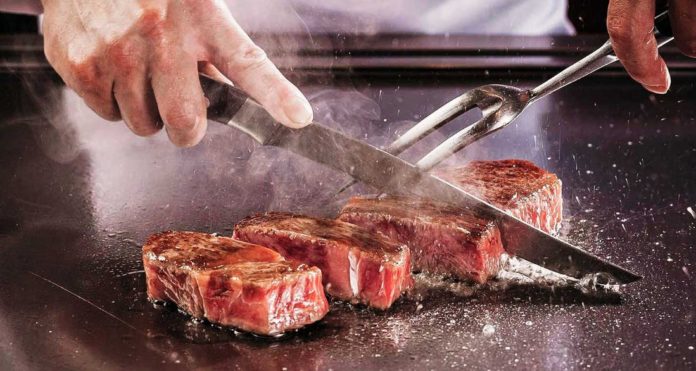
The term “Kobe Beef” is one of the most famous almost mythical terms in the world of food. It’s also one of the most misunderstood and misused. Kobe beef comes from a PURE lineage of Tajuma-gyu cattle that has been born in the Hyogo prefecture in Japan and has been certified by the Kobe Beef Distribution & Promotion Council. Also, for it to be called ‘Kobe’, it still has to go through a strict government grading exam via the Japan Meat Grading Association wherein once assed, it will carry a 10-digit identification number.
Although cattle were raised in Japan for thousands of years, they were draught animals for a long time. Vegetarianism wasn’t put on official pause until until the Meiji era, which began in 1868, when Japan opened up to the rest of the world and foreigners passing through the biggest cities demanded meat. Their own eating habits notwithstanding, Japanese producers began raising animals – meat animals – to meet the need of foreign diners. Vegetarianism was ended and producers raised beef animals for the Japanese market, as well.
Here’s where the Kobe part comes in… Yokohama was one of those emerging centers of trade between Japan and the rest of the world during the Meiji era, and it was full of foreigners who wanted to eat beef. Cattle and horses were both popular work animals in Japan, but cattle were raised in the southern parts of Japan and horses were used up north near Yokohama.
Thus, when foreigners working in Japan asked for beef, cattle needed to sourced from the south and shipped north from Kobe. When these foreigners tried this Japanese Kuroge Washu beef from the south and noticed the natural marbling and delicious umami taste, they were impressed. Since the beef was being shipped via the port of Kobe, that name become associated with this unique beef, even though the beef in fact came from all over the south of Japan, and just made a final pitstop in Kobe.
Then for a while, Japanese Wagyu and live animals were imported to the United States from Japan until both were banned from being exported. In 2012 small quantities of beef from Japan resumed export, after the U.S. lifted its own ban on imports.

Kobe Beef is very expensive, it’s not common food to eat everyday here in Philippines. It is rare
KOBE BEEF

Kobe beef (神戸ビーフ, Kōbe bīfu) is Wagyu beef from the Tajima strain of Japanese Black cattle, raised in Japan‘s Hyōgo Prefecture according to rules set out by the Kobe Beef Marketing and Distribution Promotion Association. The meat is a delicacy, valued for its flavor, tenderness, and fatty, well-marbled texture. Kobe beef can be prepared as steak, sukiyaki, shabu-shabu, sashimi, and teppanyaki. Kobe beef is generally considered one of the three top brands (known as Sandai Wagyu, “the three big beefs”), along with Matsusaka beef and Ōmi beef or Yonezawa beef.
Wagyu is just a word that means “Japanese Beef”. There are four breeds of Wagyu cattle that are native to Japan. Of these breeds, there is one that stands out as something truly remarkable: the Kuroge Washu.
It’s a breed with a unique genetic predisposition to marblizing its fat inside the muscle tissue. That incredibly marbled beef has become synonymous with “Kobe beef” and A5 Wagyu. It’s because of this special breed, the Kuroge Washu.
The ecosystem necessary to produce A5 Wagyu — the gene pool, methods of raising the animals, the feed regimen, the organizations and expertise needed to rate and certify the beef correctly — is completely unique to Japan.

Kobe beef and wagyu beef is very delicious but it is expensive. It is uncommon due its rarity, that’s why the price is very high. It is not an everyday food to the public.
This is an example post, originally published as part of Blogging University. Enroll in one of our ten programs, and start your blog right.
You’re going to publish a post today. Don’t worry about how your blog looks. Don’t worry if you haven’t given it a name yet, or you’re feeling overwhelmed. Just click the “New Post” button, and tell us why you’re here.
Why do this?
The post can be short or long, a personal intro to your life or a bloggy mission statement, a manifesto for the future or a simple outline of your the types of things you hope to publish.
To help you get started, here are a few questions:
You’re not locked into any of this; one of the wonderful things about blogs is how they constantly evolve as we learn, grow, and interact with one another — but it’s good to know where and why you started, and articulating your goals may just give you a few other post ideas.
Can’t think how to get started? Just write the first thing that pops into your head. Anne Lamott, author of a book on writing we love, says that you need to give yourself permission to write a “crappy first draft”. Anne makes a great point — just start writing, and worry about editing it later.
When you’re ready to publish, give your post three to five tags that describe your blog’s focus — writing, photography, fiction, parenting, food, cars, movies, sports, whatever. These tags will help others who care about your topics find you in the Reader. Make sure one of the tags is “zerotohero,” so other new bloggers can find you, too.
Have a WordPress.com account? Log in now.

